

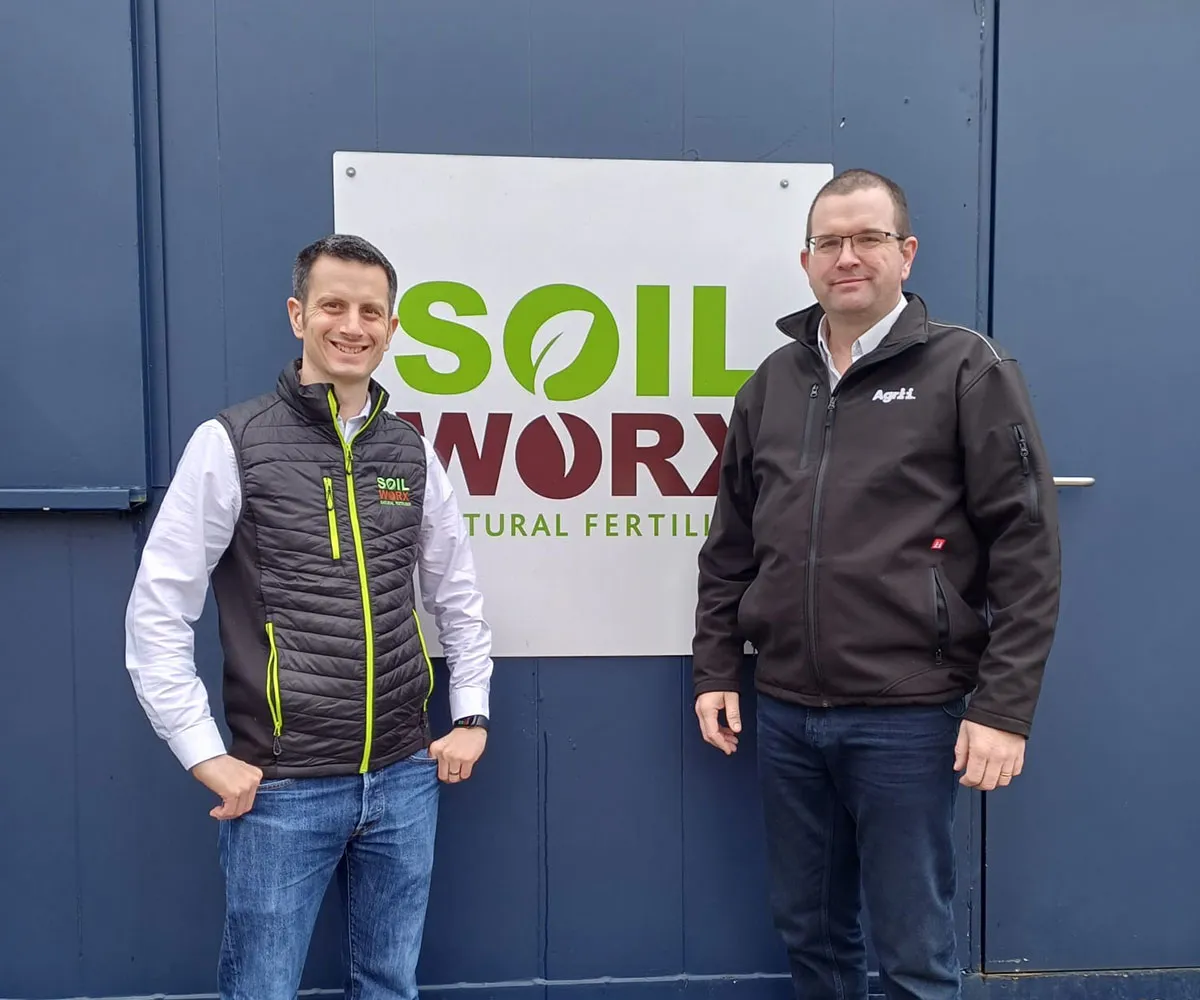
SoilWorx is a UK fertiliser company that turns poultry waste into OMRI certified organic poultry manure pellets, closing the nutrient loop between livestock and crop production. Through partnerships with Rothamsted Research, Agrii, Drummonds, Aurivo, Quinns of Baltinglass, Fruit Hill Farm and other agronomy groups, we have built a working circular economy in agriculture that helps food chains cut Scope 3 emissions while giving growers a proven organic nitrogen fertiliser for arable crops and vegetables.
Key Facts
Peer-reviewed fertiliser trial results from split-field tests at farm scale (not plot scale) across the UK and Ireland, conducted with Rothamsted Research.
60% reduction in reporting effort when growing groups adopt a single coordinated programme versus fragmented approaches.
OMRI certified pelleted poultry manure that moves excess nutrients away from sensitive catchment areas and onto cropland.
Two new products launched this year based on direct feedback from growers and agronomy partners.
Six years of partnership-led delivery across growers, distributors, food chains, and research institutions in the UK and Ireland
Agriculture faces a choice. Rising sustainability targets, tighter environmental regulations for farming, and the real effects of climate change are pressing on an industry that has worked in silos for too long. That model is breaking. Sustainable agriculture collaboration is not a competitive advantage anymore. It is a necessity.
At SoilWorx, this belief drives everything we do. Over six years of working with growers, distributors, agronomy partners, food chains, and research institutions, we have seen first-hand what becomes possible when the whole chain pulls in the same direction.
From linear supply chains to real partnerships
The traditional agricultural supply chain runs in one direction: inputs go in at one end, produce comes out at the other. But the problems facing modern food production, from Scope 3 emissions to soil degradation, do not follow that line. Fixing them demands a different way of working.
When food chain sustainability requirements are passed down without coordination, the results are patchy. A single growing group might run hundreds of different approaches at once. Measuring impact becomes almost impossible. So does driving real change at scale.
A coordinated programme, one that brings growers, manufacturers, and food chains behind a shared system, produces measurable outcomes. It also creates clear incentives for everyone involved. In our experience, even a single aligned programme across a growing group can cut reporting effort by 60% compared to fragmented approaches.
“When you can tell an entire growing group you need to put a particular system in place, these are the results we expect to achieve and this is the reward for doing so, it simplifies the process”. Dr Paul O’Hora, Sales Director, SoilWorx.”
Circular economy in practice: Turning poultry waste into sustainable fertiliser
One of the clearest examples of our partnership model is our approach to nutrient cycling in agriculture. Poultry manure is a major environmental problem, particularly in catchment areas where excess nutrients threaten water quality and limit farm growth. SoilWorx processes this manure into stable, OMRI certified pelleted poultry manure fertiliser that can be safely moved away from problem areas and applied to cropland across the UK, Ireland, and beyond.
The result is a working circular economy in agriculture. Poultry producers can expand responsibly while staying compliant with environmental law. Crop growers receive a consistent, science-backed organic nitrogen fertiliser for UK arable land and vegetable production. Food chains can show real progress against Scope 3 emissions targets through these carbon-limiting technologies.
“When you’re talking about the nutrient loop and the circular economy piece, this approach delivers dual benefits. Helping food chains manage waste from their poultry suppliers while providing sustainable fertiliser solutions for their vegetable and grain growers”. Dr Paul O’Hora, Sales Director, SoilWorx.”
Independent validation: Fertiliser trial results that hold up at scale
Asking farmers to change established practices takes more than a strong argument. It takes proof. That is why SoilWorx has invested in independent fertiliser trial partnerships with research institutes including Rothamsted. We run split-field tests at farm scale, not plot scale, across locations from the Isle of Ireland to Kent and from Yorkshire to Dorset. These trials span diverse soil types, climates, and cropping regimes, including arable crops and potato cultivation.
These are not small plot experiments. They are real-world, farm-scale fertiliser trials that produce peer-reviewed fertiliser trial results. For growers looking for the best fertiliser for arable crops, and for food chain buyers checking supplier claims, that independent verification matters.
Our chicken manure pellets and organic poultry manure pellets are tested across real conditions, not ideal ones. That is what gives farmers and agronomists confidence in the results.
Expertise across the chain: The role of agronomy partners and distributors
Sustainable agriculture collaboration goes beyond research. It means connecting farmers with the right expertise at the right time. SoilWorx works with a network of UK distributors and agronomy partners, including Agrii, Drummonds, Aurivo, Quinns of Baltinglass, and Fruit Hill Farm, to give growers advice that goes well beyond any single product.
“Collaboration has become a necessity of survival for all parties involved in the production of food. Together, the ‘whole’ becomes far less of a challenge and opportunities can be seized by everyone in the chain, especially the end users.” Tom Perrott, Speciality Nutrition Product Manager, Agrii.”Working through partners also speeds up product development. SoilWorx collects real-time feedback from the farm gate, and that input directly shapes what we make. Two new organic certified fertiliser products were launched this year based on specific requests from growers. For farmers, this means pelleted poultry manure products that reflect actual field conditions, not laboratory assumptions.
The future of sustainable agriculture is collaborative
As the pressures on agriculture grow, the case for working together only gets stronger. Reaching the genetic potential of crops in tougher conditions needs a joined-up approach, one that no single manufacturer, distributor, or grower can deliver alone. Among UK fertiliser companies, those that build real partnerships across the food chain will be best placed to meet that challenge.
For SoilWorx, building partnerships across the full agricultural supply chain, from poultry shed to dinner plate, is a requirement. We see it as the only workable path to sustainable food production in the UK and Ireland. Six years of working this way have proved the point.